Ethernet
termThe LAN technology sketched at Xerox PARC in 1973 that won every networking war and now carries almost everything.
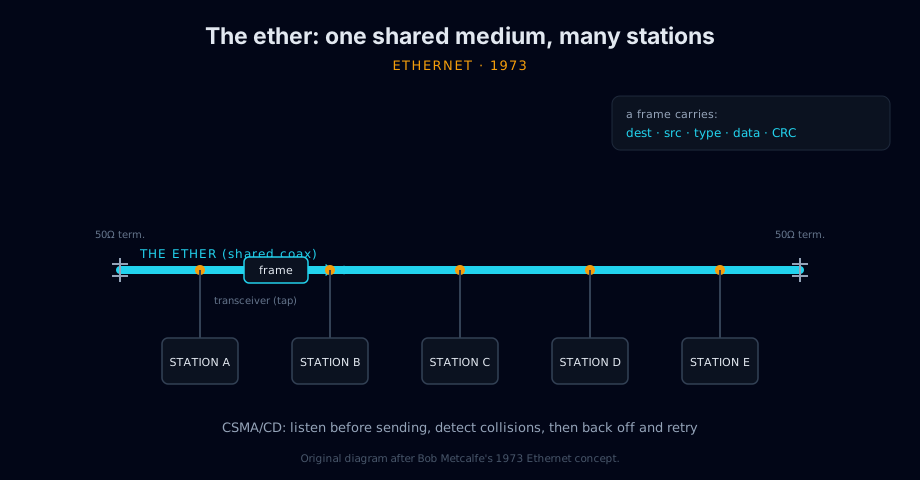
Robert Metcalfe circulated the founding memo on May 22, 1973, with David Boggs building the first 2.94 Mbit/s coax network; the ALOHA-inspired CSMA/CD let stations share a wire by colliding politely. Standardized through DIX (1980) and IEEE 802.3 (1983), it out-priced and out-iterated Token Ring, FDDI, and ATM, shedding the shared wire itself for switches along the way. From ten megabits to 800 gigabits, the frame format survives; the name now means the winner.
Ethernet won because it was cheap, simple and good enough, defeating Token Ring and FDDI which were technically more orderly and more expensive. The frame format has survived essentially unchanged for decades while everything underneath it was replaced.
That continuity is the interesting property. Original Ethernet was a shared coaxial cable with collisions and backoff; modern Ethernet is switched, full duplex, and has no collision domain at all, so the access method the name implies is vestigial. What persisted is the frame and the addressing, which turned out to be the part that mattered, and the same format now runs from a laptop port to a carrier backbone.
Also known as: IEEE 802.3, CSMA/CD